


Plan A Perfect Northern Lights Vacation: Best Time and Place To See the Aurora
Updated: Sep 7
There are a lot of things to consider when planning a vacation to see the Northern Lights. ‘When do I go to see the Northern Lights?’, ‘Where will I get the best viewings? ‘How long do I stay?’
Planning can be a little daunting, but a few handy tips will help you get a much better picture. Here is your complete guide to plan the perfect northern lights vacation for you and your family.

Photo credit: Kakslauttanen Arctic Resort
Where is the Best Place to See Northern Lights?
The Northern Lights are best viewed from in and around the Arctic Circle. The further north and closer to the Circle you travel, the better your chances of seeing the aurora. But latitude isn't the only factor. Cloud cover and light pollution play a huge role too.
That is why Lapland, the northernmost region of Europe spread over northern Finland, Norway and Sweden, is the best place you can visit to see the aurora borealis. Inland areas of Lapland, tend to have a more stable, dry, continental climate with fewer cloudy nights than coastal regions, are considered the prime viewing destinations. Here in Lapland, the lights are visible on roughly 200 nights a year during aurora season.

Finland, in particular, has a great tourism infrastructure centred around the northern lights, with a variety of specialized activity operators, hotels, resorts and easily accessible transport coupled with ideal weather conditions. In Finland, the Lappish capital of Rovaniemi is a great destination to serve as the launch pad for your northern lights vacation. You will get many options for northern lights hunting tours to do from the city. Further inland, the village of Saariselkä is well-known as a spot for Northern Lights sightings. This is where you'll find the famous glass igloos of the Kakslauttanen Arctic Resort, which let you watch the sky all night from the comfort of your bed. Ski resorts like Levi and Oulu are also favoured by travellers to combine winter sports with nights lit up by the northern lights.
What is the Best Time to See Northern Lights?
Timing is everything when it comes to catching the aurora borealis. The season for northern lights viewings varies greatly between different parts of the world where they can be seen. Broadly speaking, they can be seen between late August through early April.
The peak viewing season is roughly between September and April, when winter nights are long and dark enough to see them clearly with the naked eye. Short daylight hours in late autumn and into the winter also gives you more opportunities to see the northern lights. Outside this window, the midnight sun close to the poles keeps the sky too bright for viewing, even if solar activity is strong.
What is The Best Time of Night to See the Aurora?
Regardless of the month, the lights tend to be at their brightest around midnight. Aurora hunting tours are typically scheduled for the evening and late-night hours, so be prepared for a late night out.
A stay in a glass igloo is preferred by many travellers as it gives you the chance to spend whole nights under the stars, catching a sighting of the aurora right from the comfort of your own bed.

How Long Should You Stay in Lapland for the Best Northern Lights Experience?
As the northern lights are a purely weather phenomenon, they cannot be predicted or guaranteed with a 100% certainty on any given night. Even during peak season, in one of the best viewing locations on Earth, clouds, weather patterns, or low solar activity can mean a quiet sky on any individual evening. So it’s never recommended to pin all your hopes on just one night.
For most travellers coming to Lapland, three to five nights are the sweet spot. It is highly recommended to spread this stay across destinations within Lapland, like a night or two in a city like Rovaniemi and two nights or more in a more secluded location like Saariselka. This way you can mix and match with going on multiple northern lights hunting tours and spending more relaxed nights in a glass igloo.
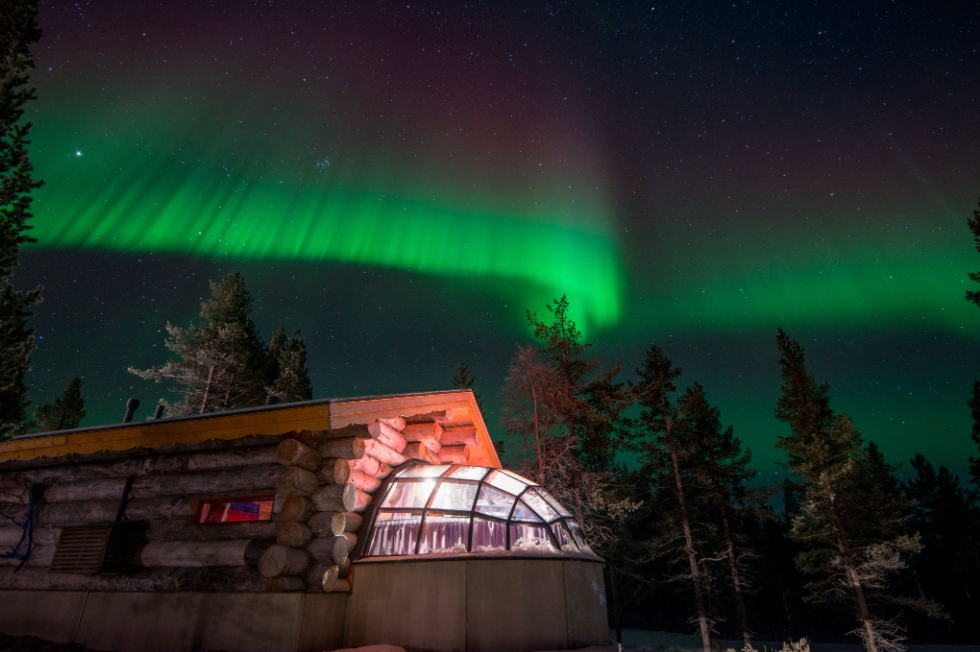
Photo credit: Kakslauttanen Arctic Resort
Whichever season you choose to travel in, a multi-night stay gives you flexibility to adjust to changing forecasts as your trip unfolds.


Comments